
3 Magnificent Detectives Who Break The Rules
Why do we love them?
Because they prioritise absolute justice over bureaucratic red tape, satisfying our deepest desires for fairness, autonomy, and moral certainty.
Here is a breakdown of why this archetype captivates us:
The pursuit of higher justice: They show that the legal system is often flawed, slow, or corrupt, proving that doing what is right matters more than following the letter of the law.
Wish fulfilment and autonomy:
They operate with a freedom we rarely experience in our highly regulated lives, acting as agents of pure agency who answer to no one.
Brilliant outsider status:
Their willingness to cross lines highlights their exceptional intellect and instinct, making them more fascinating than ordinary, compliant investigators. 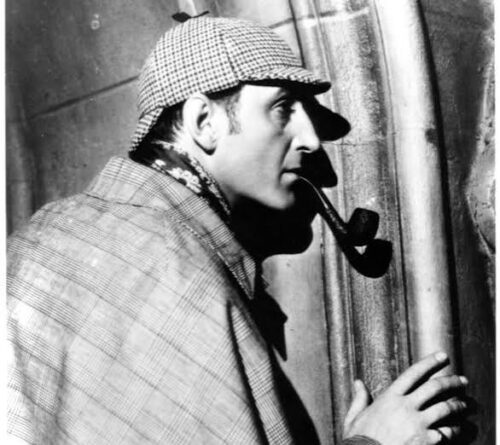
Relatable flaws and humanity:
A rule-breaking detective is inherently compromised, making them deeply human, vulnerable, and morally complex rather than cleanly heroic.
Guilt-free thrill-seeking:
Watching those magnificent detectives cross boundaries allows us to experience the excitement of rebellion from a safe distance, knowing their ultimate goals are noble.
So, Why Do We Love Mysteries?
People love mysteries because they trigger a mix of brain chemistry, evolutionary instincts, and a psychological need for order.
The Dopamine Rush of solving puzzles:

Our brains are wired to notice gaps in information.
When you try to figure out a puzzle or a whodunit, your brain releases dopamine (a chemical that makes you feel good) when you find a clue or reach an “aha!” moment.
There is a psychological principle at work:
Our minds hate unfinished tasks, so an unresolved plot or an open question creates mental tension, making it hard for us to put a book down until you know the ending.
Evolutionary Survival:
Early humans depended on tracking clues, spotting hidden threats, and reading intentions to survive. Enjoying mysteries lets us practice these natural problem-solving skills in a safe environment.
Safe danger:
True crime and thrillers let us explore fear, dark psychology, and dangerous situations from the safety of a couch or a book page. It acts as a mental rehearsal for avoiding real-world harm.
Emotional Closure and Moral Reassurance:
Real life is messy and full of loose ends. Mysteries offer a neat structure where chaos turns into order, and the truth eventually comes to light.
Stories often provide a sense of justice. Whether through a detective catching the culprit or a true-crime case reaching a verdict, they remind us that actions have consequences and wrongs can be righted.
Love a good twist? Get the clues before anyone else.
If you survived this post and you’re still craving more suspense, don’t walk into the dark alone. Join my inner circle of mystery lovers today.
As a thank you for crossing the line, I’ll instantly send you a copy of The Long Hard Road—an exclusive story only available to my VIP members.
Get ready for monthly behind-the-scenes secrets, character reveals, and first dibs on any upcoming releases.
Here’s an extract from a Q&A session on a book promotion site: Do you focus more on creating strong characters or a strong plot?
For me, it’s fifty per cent of both. As the various series have developed, I feel I have created dozens of solid characters, although many only appear in one book. Several characters have appeared in a series, and their personalities have determined how the plot I selected was handled. I never set out with a rigid script.
I establish a rough framework for the book and a time frame. Then, I let the characters take me where they wanted to go. That’s why some characters I enjoyed creating and writing about had to go. When I was in that garden centre, staring at bedding plants crammed into a tray, it dawned on me that to enable others to grow; some plants needed thinning out.
Send Me My Free Copy of The Long Hard Road
Another book-related topic soon…
Best wishes
Ted Tayler