
Crime fiction characters can begin as names on a page, but after years of writing them, they can start to feel surprisingly independent.
I’ve spent so long with characters in my long-running series that it’s easy to become obsessed. That feels weird. They’re not real people, even though I spent ages trying to make them feel like real people for my readers.
Two characters in particular have occupied my thoughts for many years: Colin Bailey in The Phoenix Series and Gus Freeman in The Freeman Files. They are very different men, living in very different worlds, but both taught me how important it is to understand a character before asking them to drive a story forward.
When Crime Fiction Characters Begin to Feel Real
I’ve thought about them a great deal while writing The Phoenix Series and The Freeman Files.
Where are they now and what are they doing? How would they deal with the situation I’m planning for the next book? What is happening in their private lives? What is their relationship with their colleagues?
This was all useful material because understanding their actions, feelings and motivations helped me drive the plot.
Gus Freeman is a retired detective inspector whose experience, patience and attention to detail made him ideally suited to investigating cold cases. Colin Bailey—the Phoenix—occupies a much darker world, where the dividing line between justice and vengeance is far less comfortable.
Despite those differences, both needed to work as believable crime fiction characters, rather than exist simply to move a plot from one chapter to the next.
When the Characters Grab the Steering Wheel
Someone once asked me whether I was a plotter or whether I flew by the seat of my pants.
I realised I was a bit of both.
I prepared a suggested route from A to B and set off. At some point, the characters grabbed the steering wheel, and we reached B by a totally different route.
On some occasions it wasn’t B at all, but somewhere I hadn’t imagined I’d be visiting.
That may sound strange to someone who doesn’t write fiction, but once you know a character well enough, certain actions simply stop feeling believable. You know how they think, what motivates them and how they are likely to react.
Forcing them to behave differently just because the original plot demands it can make the whole story feel wrong.
Sometimes the better option is to let the character win.
Keeping Characters Believable
I concentrated on gripping, atmospheric plots, believable characters and using appropriate dialogue.
For me, the private lives of recurring characters mattered too. Their friendships, relationships and experiences outside an investigation helped turn them into people readers could recognise and hopefully care about.
That becomes particularly important in a long-running series. Readers may arrive for the mystery, but familiar crime fiction characters give them another reason to return.
Dialogue plays its part as well. I’ve always tried to make it appropriate to the character and situation without adding things simply for effect.
Swear words are at an absolute minimum.
My mother never had the chance to read any of my books, but I wrote them as if she was going to read them as soon as I’d finished them.
That was as good a test as any.
Gus Freeman and Colin Bailey
Gus and Colin could hardly be more different.
The Freeman Files revolve around careful investigations, cold cases and the gradual discovery of the truth. The Phoenix stories move faster and explore a much more uncomfortable question: what happens when someone decides that the justice system has failed and takes matters into his own hands?
Yet writing both series taught me much the same lesson.
The stronger my understanding of the characters became, the less willing they seemed to follow instructions.
Perhaps that is why recurring crime fiction characters can become so important to their authors as well as their readers. You spend years deciding what they believe, who they trust, what they fear and how they will react when everything goes wrong.
Eventually, you don’t need to ask quite so often.
You already know.

Meeting the Characters for Yourself
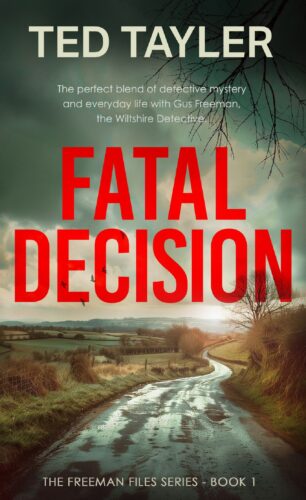
If you haven’t met Gus Freeman yet, Fatal Decision is the first case in The Freeman Files and the natural place to begin his story.
If Colin Bailey and the darker world of the Phoenix appeal more, The Olympus Project begins The Phoenix Series.
Whichever you choose, I hope you’ll find crime fiction characters you enjoy spending time with as much as I enjoyed creating them.
Another book-related topic soon…
Best wishes
Ted Tayler